Thursday, 25 October 2012

WTD#17 - Island Adventure - Part 4

We rushed to catch the 8 am ferry back to the main island and then drove south to a place called Alder Bay, where we connected with the Tuan, a forty-foot sailboat run by the Seasmoke whale-watching company.  We joined the other guests on board (we were 9 people all together, plus 2 crew) donned our survival overalls and headed out into the fog.

It was a bit chilly on the water, and we were wondering if we would be able to see anything with the fog, but were distracted with hot tea and coffee and fresh-baked muffins from the galley below.

After 15 or 20 minutes of sailing, and just as the sun was beginning to penetrate the fog, we passed a small island with a group of Steller Sea Lions.


The bulls were busy posturing and bellowing, and the cows were just catching some rays.  The one in the foreground looks very relaxed.


The Steller Sea Lion as well as the Steller's Jay and several other species native to BC, are named for Georg Wilhelm Steller, the German botanist and zoologist who explored Siberia and Alaska in 1740 and 1741 as a member of Vitus Bering's second Kamchatka expedition.  On the return voyage they were shipwrecked on what is now Bering Island.  Bering and about half the crew died in the aftermath of the wreck.  The remaining crew managed to construct another boat and sailed it back to Siberia.  Steller himself died two years later on his return voyage to Europe.

A short time later we entered Blackfish Sound, a body of water about 10 km or so wide, defined by a perimeter of several islands.  We heard this humpback blowing and then it emerged out of the fog.


Before long we found ourselves in the midst of what seemed like ten or a dozen whales feeding throughout the sound, some near and some in the distance. 

Apparently humpbacks can stay submerged for up to 45 minutes, but usually come up to breathe every 5 or 10 minutes.  I noticed, in a few instances, that a whale would surface 2 or 3 times in fairly quick succession without showing it's tail, and then, on the final dive it's fluke would appear just before it went under and we wouldn't see that individual again, for a while anyway.

The narrow arch of it's back was telling me this whale's tail would come out of the water just before it disappeared.

Et voila!  It was amazing to be floating silently among these awesome beings, watching them and listening to the sounds of them emerging, blowing, and then sliding back under the surface.

Apparently each whale has unique markings on the flukes, and this is a way to identify individuals.


This is a Common Murre, one of the many birds hanging around where the whales were feeding - picking up scraps brought to the surface, maybe?

I finally clued in to what the term "sea smoke" means.  Here a couple of whales are blowing simultaneously on the far side of the sound.

Humpbacks were hunted to the brink of extinction until a moratorium was introduced in 1966.  Since then the population has been recovering worldwide, but they have only returned to the Johnstone Strait area in the past decade or so.

A beautiful day and a beautiful setting for hanging with the humpbacks.

There was one other (bigger and more crowded) whale-watching boat in the sound, but we rarely got close to them.


A couple of our fellow passengers.  This couple was from Switzerland and there was another group from Great Britain and I think the rest were Canadian.

Twice, TWICE!!  one whale breached, that is launched itself right out of the water and fell back in with a mighty splash, not far from our boat.  I was looking the other way both times :( 


I had to console myself with fresh-baked scones, jam and Devonshire Cream

All too soon we watched the last fluke slip beneath the sea, and headed back to the harbour.

This whale was navigating through the same narrow passage between islands that was part of our route back.

Back at the dock, and one last look back at the Tuan after a spectacular and moving day among the whales.

Next time - Cape Scott and more ...

Wednesday, 17 October 2012

WTD #16 - Island Aventure - Part 3

From Gold River we took a logging road shortcut across the island and re-connected with the island highway at Woss, then drove north to Port McNeill, from whence we took a ferry across to Malcolm Island and the village of Sointula - about a half hour trip.

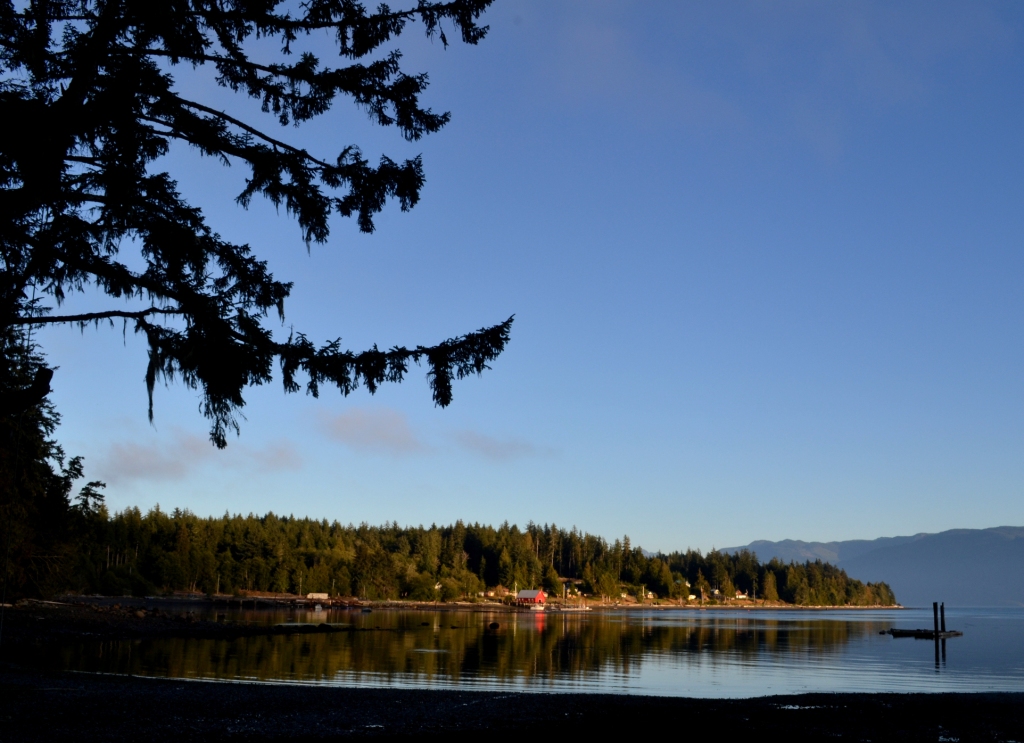
This is the village of Sointula seen from the ferry.  The larger building is the hotel.


This is the beach in front of the lovely cabin we stayed in - Sea4 Miles Cabins.  We spent two nights on Malcolm Island.


The afternoon we arrived, we took a drive along the one main road that runs the length of the island.  The road follows the southern shoreline (facing Vancouver Island)

 I couldn't resist another heron photo.

It is a picturesque place - reminded us a bit of the Kootenays - a lot of artists and alternative folk, a bit like the Slocan Valley with oceanfront.


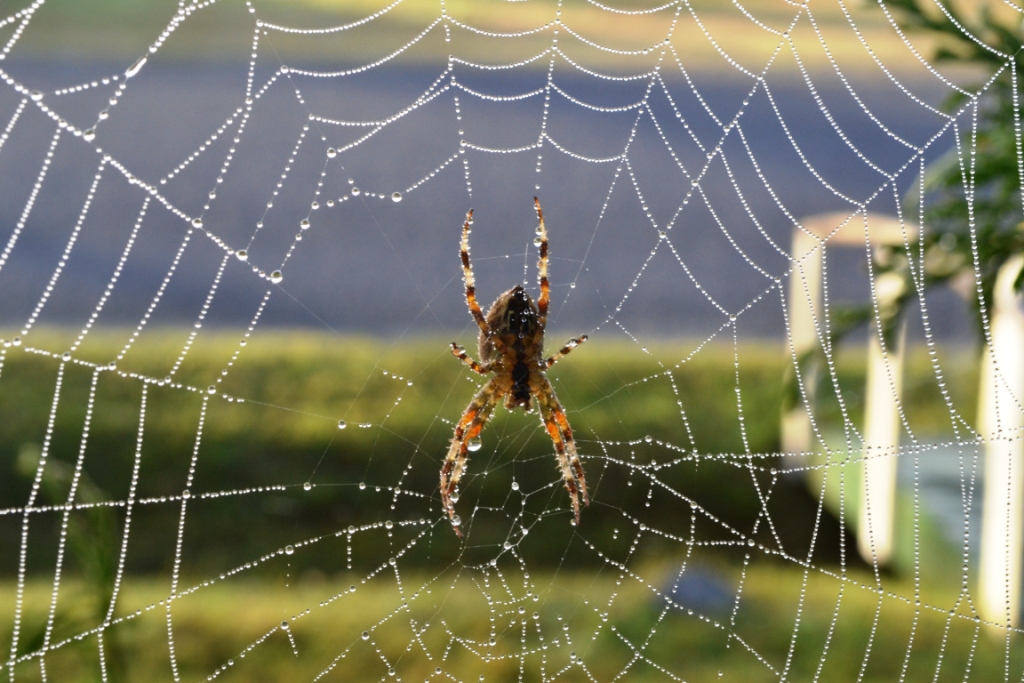
The next morning I got up early and joined this spider in our front yard enjoying the view.


The droplets on the web are from the fog that was coming in nightly.  I'm thinking the spider must have remained absolutely motionless  all night or the droplets would have shaken off??


We drove to the north side of the island to hike on the Bere Point trail as the fog was beginning to lift.


The trail starts out in dense salal, and follows the edge of a steep cliff/slope down to the ocean.


A tunnel through the lush vegetation


The trail entered a lovely second-growth forest just as the sun was burning through the last of the fog.


There were lots of mushrooms and other fungi along the trail.


I guess I had a thing for spiderwebs that day.


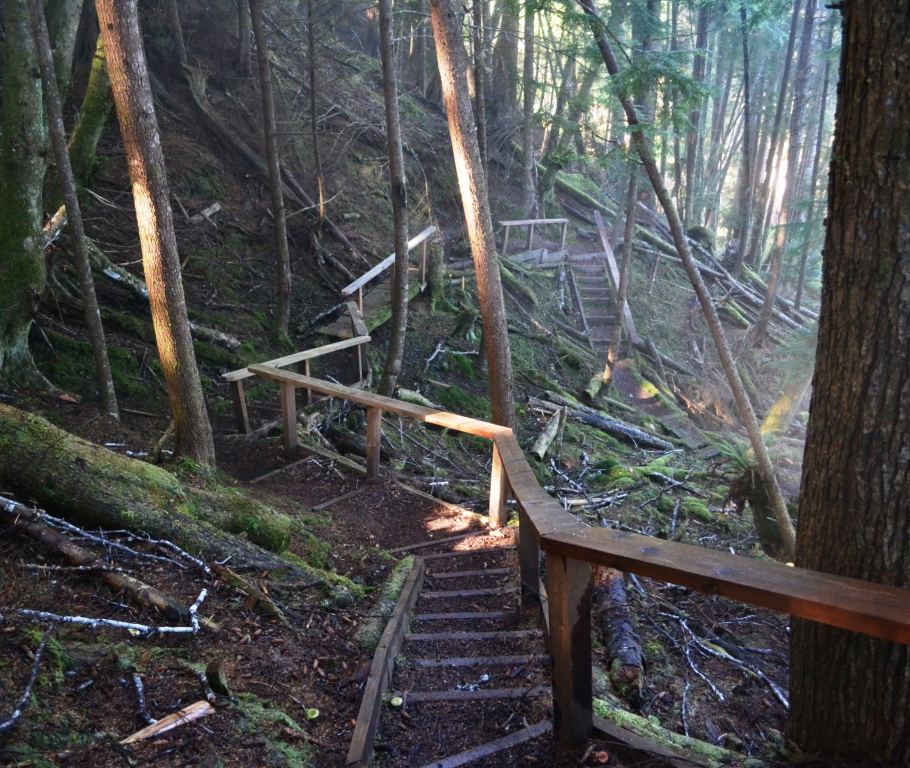
At one point there is a steep gorge and the trail descends a series of stairs down to the beach.


A telephoto view of some of the mountains of the mid-coast area of the mainland.


A red huckleberry bush growing out of a stump.


Far offshore we saw a couple of Dall's Porpoises.  They look a bit like small versions of Orcas, with a black upper body and white belly.  We had hoped to see some Orcas because there is a spot along the shore here where they sometimes come very close to the beach to rub on the rounded stones, but alas we missed each other.  I did notice that the hotel bar is called the "Rub Pub".


We had made arrangements to be let into the Sointula Museum later that afternoon.  Sointula ("Harmony" in Finnish) was founded by a group of Finnish communalists/socialists at the turn of the century.  The actual communal organization fizzled out after a few years but the people and the socialist ideals remained.  About half of the current inhabitants are descendents of the original Finnish settlers.  This banner once graced the stage of the community hall.

 This photo from the museum shows the location of the banner in the old hall.

The Young Pioneers youth group in 1932.  The museum has a lot of really interesting photos and artefacts from the rich history of this unique BC community.

Next time - Sea Smoke!


Saturday, 13 October 2012

WTD#15 - Island Adventure - Part 2

After a couple of days on the Sunshine Coast we took the ferry from Powell River to Comox, on Vancouver Island.  We drove through Strathcona Park to Gold River, located a few kilometers upriver from the end of Muchalat Inlet, on the west coast of the island.  Gold River was created in 1967 to service a new pulp mill situated at the head of the inlet.  Then the mill shut down in 1998 and a lot of folks had to move out.  Currently the economy is a bit of logging and some tourism.  We spent three nights at a B&B in town.

The evening that we arrived we drove down to the inlet.  There is a dock with some industrial activity - log loading etc.  This is a view from the dock out into the inlet.  The salmon were gathering at the mouth of the river and leaping out of the water - I don't know why.


The next day I back-tracked to Strathcona Park and went for a hike up Crest Mountain.


The bottom half of the trail goes through an amazing old-growth Douglas Fir forest.  These trees are all around four feet or more in diameter.


A photo doesn't really do it justice.

This slug caught my attention - interesting markings

About three-quarters of the way up this Turkey Vulture, perhaps sensing how I was feeling, came to check me out.  After determining that I was not quite ready to expire it flew off.


The long grind finally paid off as I emerged on a lovely alpine highland, where I wandered around for a couple of hours before heading back down.


Still the occasional butterfly and flower up here.

This is one of the Fritillaries, perhaps the Zerene Fritillary (there are a number of very similar looking species)


One of several small ponds in the alpine area


At the summit, one is greeted by an enormous black phallus.


The next day we took a forestry road to Tlupana Inlet, which is between Gold River and Tahsis.


There were some curious harbour seals hanging around a log dump in Nesook Bay, along the way.


A mother and her pup, maybe?


This is the forestry rec site at Cougar Creek.  There were several campers there, fishing for salmon off the dock or in boats.  Apparently it is very popular in the summer.

Further along the road we found the Tupa marina, with not a soul around.  We heard later that it is also busy during the summer, but by now (later in September) it was pretty well abandoned.


When we walked out on to the floats, we found the water teeming with thousands of these small fish, maybe eight to ten inches long.  Apparently they are pilchards and/or mackerel, and particularly abundant this year.


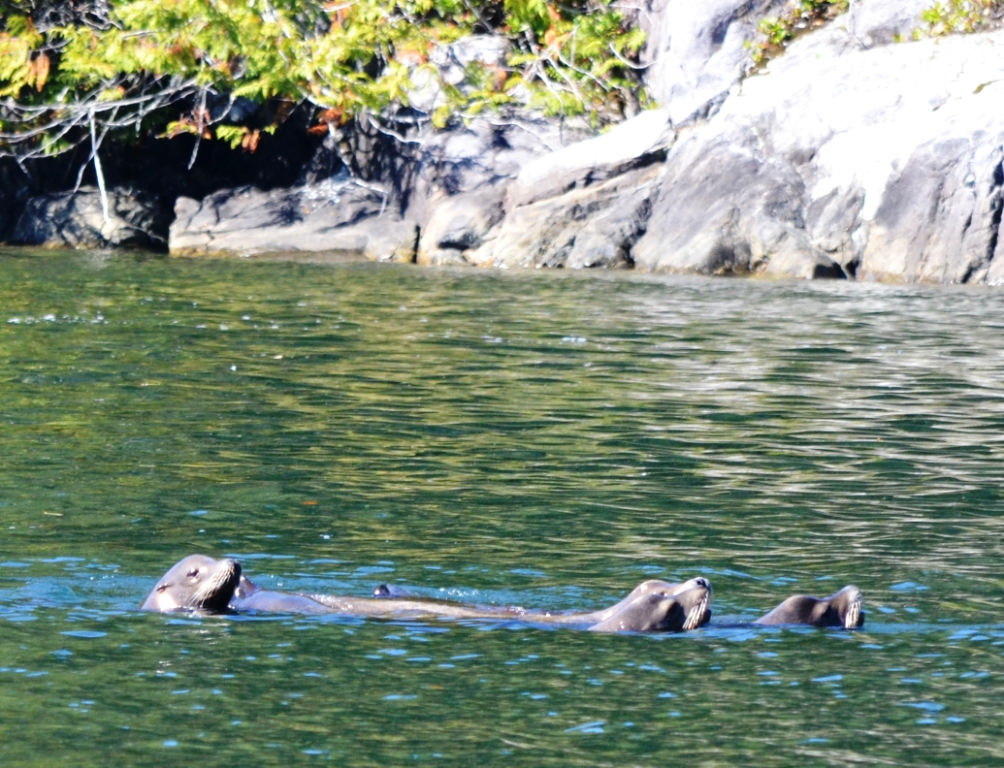
Not far off the end of the floats several California Sea Lions seemed to be playing around and having a good time.

The California Sea Lions breed further south, but after the breeding season groups of males such as these head north to feed before returning to the western US to breed once more.

Apparently very playful by nature, these are the trained "seals" used in circus acts. (Hopefully not so much anymore)

They would make forays into our little bay, probably gorging themselves on all those fish.


On the road to Tahsis we stopped at a bridge over a river where the salmon were congregating and about to start their run.

This is Tahsis, a tiny village in a beautiful setting.  Had a bite in the pub at the marina.  It seems to be mostly sport fishing and tourism that supports this community now.

The end of a great day exploring the west coast inlets of the central island!

Stay tuned for Port McNeill, Sointula, Alert Bay and more ...